
The resurgence of COVID-19 has dented but not debilitated economic activities in the first half of Q1 of the current fiscal even though caseload of infections is much higher than before, according to an RBI article. The ferocity of the second COVID-19 wave has overwhelmed India and the world, the article said, adding that war efforts have been mounted to stop the surge in its tracks. "The impact of the second wave on the real economy seems to be limited so far in comparison with the first wave. Evidently, the localised nature of lockdowns, better adaptation of people to work from home protocols, online delivery models, e-commerce and digital payments are at work," the article on the state of economy authored by RBI Deputy Governor M D Patra and other officials said.

The President talked about demonetisation, electoral reforms and disruptions in Parliament.

The land transfer or subleasing would allow the Patanjali Group to set up the food processing facility and entitle it to other incentives under the central policy guidelines.
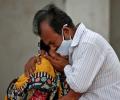
'We will see a kind of disaster which the country has not seen in the last 100 years.'

With the dizzying rise in the number of Covid-19 cases in the country, India Inc has transitioned from a wait-and-watch policy to full-on emergency mode, bringing back remote and flexi work, stringent safety protocols, and allowing only essential travel. Companies - especially in metros like Delhi, Mumbai and Kolkata - that had adopted a hybrid work model during the last few months when the caseload remained low, are either switching back entirely to work-from-home (WFH), or calling skeletal staff to office on select days. Take the case of cigarettes-to-hotels major, ITC, which had been on a hybrid work model over the last few months.
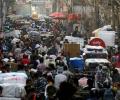
India's macroeconomic situation is certainly better than what it was a year ago, eminent economist Pinaki Chakraborty said on Monday, while expressing hope that the country will be back on the path of economic growth if there is no major third wave of the COVID-19 pandemic. In an interview with PTI, Chakraborty, who is the director of the National Institute of Public Finance and Policy (NIPFP), said that inflation may remain at an elevated level as there was a significant fiscal and monetary expansion in the last 18 months. "The current macroeconomic situation is certainly much better than what it was one year back. We are seeing recovery in most sectors," he said. Chakraborty noted that COVID-19 vaccination has been going on at a very fast rate in India.

India's industrial production grew by 1 per cent in December, official data showed on Friday. According to the Index of Industrial Production (IIP) data, the manufacturing sector output grew by 1.6 per cent in December 2020.

The average rate of COVID-19 vaccination in the country has been 10.8 million per week. At that rate, it will take India till December 2024 to complete two billion doses.

Core to the planning is the rigidly-enforced closed loop that physically separates Games-related personnel from the local population

Looking to push nearly 28 million over 11-year-old polluting vehicles off-roads, the government has proposed incentives worth 8-12 per cent of the cost of a new vehicle for surrendering the old ones.
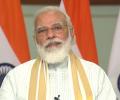
"The emphasis is on making every rule, law, policy people-centric, and public-friendly. This is the use of the new governance model and the country is getting its results," Prime Minister Modi said while speaking at the launch of a platform for 'Transparent Taxation -- Honoring the Honest'.

Economist Deepak Nayyar says economic openness, while necessary, is not sufficient, and is conducive to development only when combined with industrial policy.

The internals of the food inflation are worrying, given a broad-based uptick across categories that tend to be sticky, such as proteins, and a narrower-than-expected reduction in inflation for vegetables.

India's economy could prove to be the "most resilient" in the subregion of South and South-West Asia over the long term, according to a report by the UN, which says a positive but lower economic growth post COVID-19 pandemic and the country's large market will continue to attract investments. The report titled 'Foreign Direct Investment Trends And Outlook In Asia And The Pacific 2020/2021', and compiled by United Nations Economic and Social Commission for Asia and the Pacific (UNESCAP), stated that inward FDI flows to South and South-West Asia slightly decreased by 2 per cent in 2019, from $67 billion in 2018 to $66 billion in 2019. The growth, however, was mainly driven by India, which accounted for 77 per cent of the total inflows to the subregion and received $51 billion in 2019, up 20 per cent from the previous year.
'There is still scope for selective stockpicking.'

COVID-19 has emerged as an important form of diplomatic currency around the world as nations try to showcase their soft power gains. In this race, India has an edge as India is already a pharmaceutical giant having produced some 60 per cent of global vaccines and now justly seeking to strengthen ties and expand its influence in its neighbourhood and beyond, observes Dr Rajaram Panda.

Several individuals and organisations, including the US Chambers of Commerce and the National Association of Manufacturers, have filed a lawsuit against the Trump administration's recent rules related to the H-1B visa, terming them "arbitrary" and "haphazard" regulations that will undermine high skilled immigration into America. Early this month, the Trump administration announced new restrictions on H-1B non-immigrant visa programme which it said is aimed at protecting American workers, restoring integrity and to better guarantee that H-1B petitions are approved only for qualified beneficiaries and petitioners, a move which is likely to affect thousands of Indian IT professionals.

Only a few thousand chargers dot the Indian landscape, some in working condition, others not, with some held hostage to the power supply vagaries of local utilities, reports S Dinakar.

Even as Chinese troops continue squatting on territory that we claim as our own -- this was the lowest allocation for defence in percentage terms since the 1950s, reveals Ajai Shukla.

The government has been waiting for the expansion by the private sector, Finance Minister Nirmala Sitharaman said while reminding India Inc of various measures including corporate tax rate cut, policy consistency, ease of doing business, among others to facilitate investment.

Inflation in food articles during May stood at 1.13 per cent, as against 2.55 per cent in April.

A 15 per cent corporate tax rate for services companies in SEZs, setting up a fund for deep-tech startups and establishing clusters to demonstrate design-to-manufacturing capabilities of tech firms were some of the key demands made by the IT sector at the pre-Budget consultation on Monday. The participants shared their views and suggestions regarding Big Data, incentives for encouraging setting up of data centres, fiscal incentives for data localisation, incentives for pushing digital penetration in rural areas, and corporate guarantee to startups for competing with other nations.
India's youth has to be both educated and employable.

Among possible new members, former chief economic advisor Arvind Virmani's name is doing the rounds.
A total of 40,845 cases of black fungus or mucormycosis have been reported in the country so far, of which 31,344 are rhinocerebral in nature, and the death toll from the infections stands at 3,129, Union Health Minister Harsh Vardhan said.

'India-China economic ties are likely to take a hit in the wake of the new situation, but that also provides India with a new opportunity to strengthen its manufacturing base,' points out Dr Rajaram Panda.
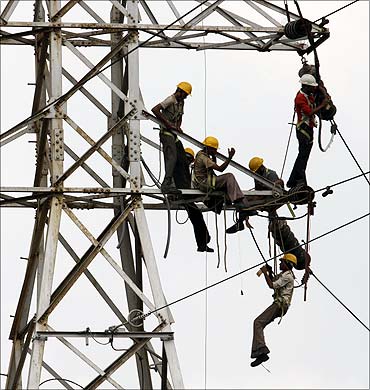
Power transmission infrastructure in 18 major cities could be potentially hacked.

Going forward, the February factory output may be impacted as several industries such as automobiles, technology, pharma and fashion have some exposure to imports of raw and intermediate materials from China.

For deciding which vehicles are to be scrapped, the setting up of fitness centres and regulating them would be a humongous task.

Ajit Balakrishnan offers a thinking man's guide to e-commerce controversies.
As states grapple with a shortage of coronavirus vaccines, the Centre on Thursday said that over two billion doses will be made available in the country in five months between August and December, enough to vaccinate the entire population.

The Department of Commerce alleged that Huawei was engaged in activities that are contrary to US national security or foreign policy interest.
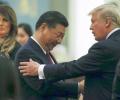
The White House has said the forthcoming book by John Bolton is "full of classified information"

The government believes that WTO's push for initiating negotiations on substantive obligations related to e-commerce will oblige India to permanently accept the current moratorium on imposing customs duties on products traded electronically.

'It is in electronics that the gap between where we are and where we need to be is most obvious and most persistent.' 'It is not only a national security issue, but also a commercial issue,' argues Rajeev Srinivasan.

The major reason for the policy confusion over e-vehicles is the lack of conviction within government about the utility of this disruptive technology and its role in India's larger Paris Agreement climate change commitments.

The dust over the controversy around foreign direct investment (FDI) in the defence sector appears to have settled.
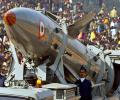
Will private firms really boost Make in India in the defence sector? Ajai Shukla seeks answers.
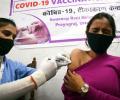
'Scientific data has proven that masks can reduce COVID-91 transmission by 53 per cent...A booster dose of vaccine, even if it works, is just a temporary fix'

Beyond announcements and optics, key projects have hardly moved under the Yogi government, reports Virendra Singh Rawat.
 © 2026 Rediff.com - Advertise with us - Disclaimer - Privacy Policy - Sitemap - Feedback - About us - Terms of use - Grievances